The Current State: EdTech, TeenTech, and AI
A Collaborative Report by Washington Leadership Academy & DC AI Collaborative · Fall 2026
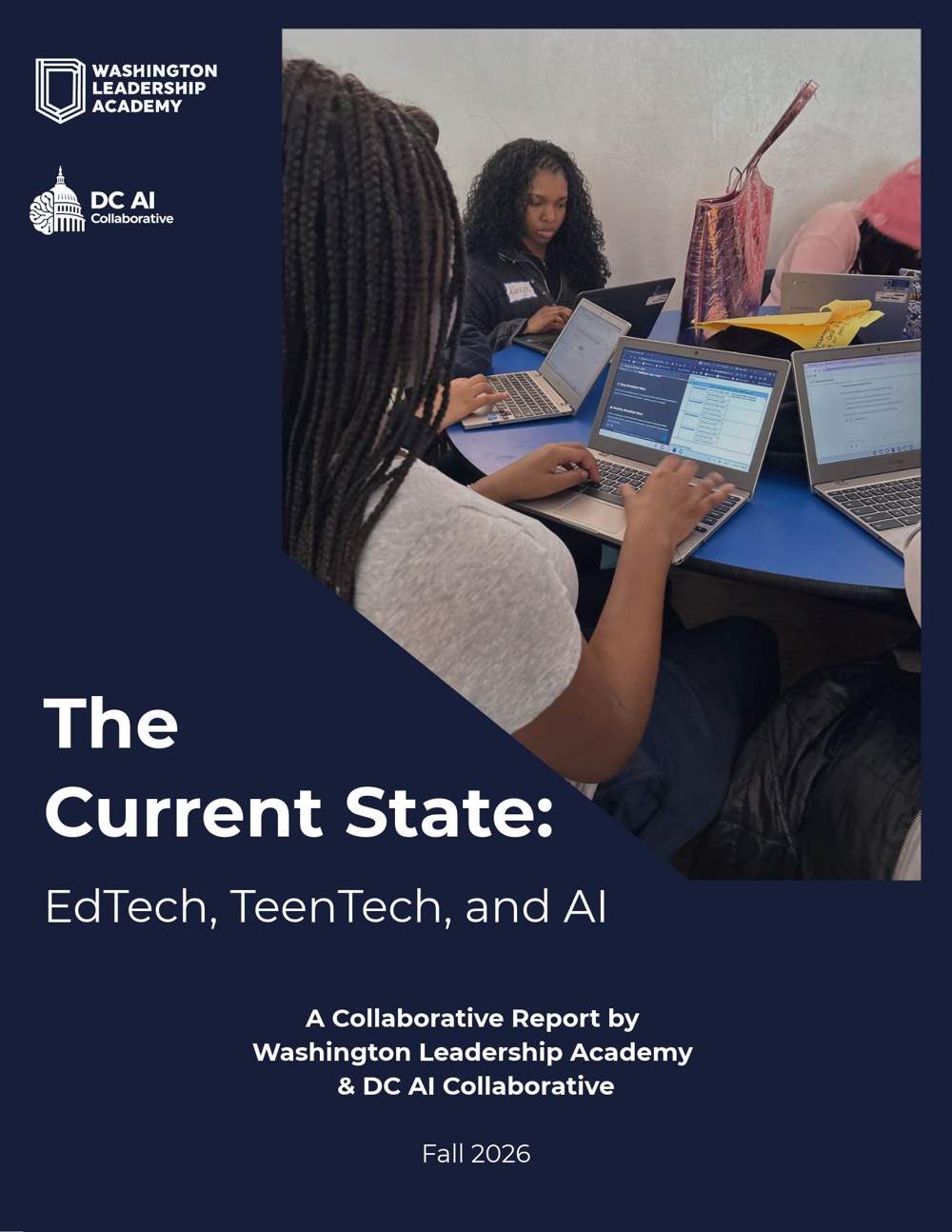
On September 30, 2026, Washington Leadership Academy and the DC AI Collaborative convened educators, school leaders, researchers, policymakers, and community partners to explore the current state of EdTech, TeenTech, and AI. The session began with an examination of emerging trends, research, and national dilemmas, followed by expert perspectives from Rhitu Chatterjee of NPR and Julie Kelleher of LikeAMother.ai.
Participants then shifted from discussion to collaborative problem-solving, rotating through three whiteboarding stations grounded in research findings, data, and guiding questions. This report captures the ideas and perspectives shared during that activity and identifies opportunities for continued collaboration across DC’s education ecosystem.
Three questions, explored in nine rotations.
The AI-Enabled Classroom
What should an ideal, human-centered AI-enabled classroom look, feel, and sound like?
Stakeholder Responsibility
What do schools need from policymakers, EdTech vendors, and school leaders before introducing new technologies to teachers and students?
The Role of Parents
How should parental involvement and school-family partnerships evolve across elementary, middle, and high school?
What emerged across the whiteboards.
Start with Purpose
Keep Humans in Control
Protect Productive Struggle
Build Capacity, Not Just Guardrails
Share Responsibility Across the Ecosystem
Lead With Transparency
Participants emphasized that responsible AI implementation should prioritize human agency, meaningful learning, and intentional decision-making over technology adoption for its own sake.
“Where do we want AI, and where don’t we want AI?”
One question from the whiteboards captures the challenge ahead. Responsible AI implementation is not simply a technology challenge; it is an educational, developmental, and collective responsibility.