Our Approach
The DC AI Collaborative is grounded in a simple belief:
Artificial intelligence should strengthen teaching and learning — not undermine trust, deepen inequity, or add to educator burden.
Our approach is shaped by real classrooms, educator expertise, and the responsibility schools carry as stewards of emerging technology. We support schools in navigating AI thoughtfully, collaboratively, and with students and communities at the center.
-
We begin with equity.
Schools serving historically marginalized communities are often the last to gain access to emerging technologies, and the first to experience their risks. The DC AI Collaborative prioritizes schools and educators who serve Black, brown, and low-income students, ensuring that AI integration expands opportunity rather than reinforcing existing gaps.
This includes:
Attention to bias and unintended consequences in AI tools
Clear expectations around transparency and student understanding
Strong safeguards for data privacy and responsible use
Equity is not an add-on to our work. It is the lens through which all decisions are made.
-
Teachers are not passive consumers of AI tools. They are designers, decision-makers, and leaders of instructional change.
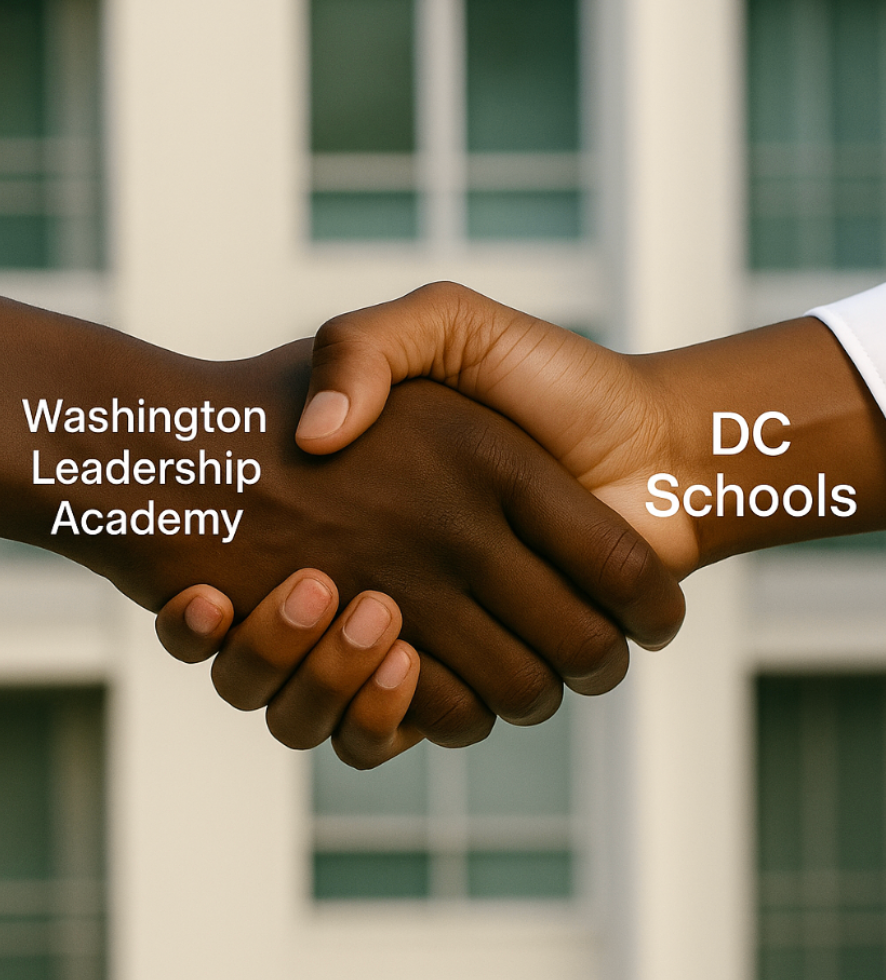
The DC AI Collaborative is grounded in real classroom practice at Washington Leadership Academy and partner schools. Educators pilot AI-supported strategies in live learning environments, reflect on what works and what doesn’t, and share lessons learned across schools.
By centering educator leadership, we ensure that AI integration is:
Instructionally sound
Feasible within real school constraints
Responsive to the day-to-day realities of teaching
What we share across the Collaborative is tested in practice, not imagined in theory.
-
We believe that effective AI integration must preserve the central role of human judgment, relationships, and professional expertise.
The DC AI Collaborative emphasizes responsible use, including:
Clear guidelines for ethical decision-making
Transparency with students and families
Critical evaluation of tools, not just whether they work, but whether they align with educational values
AI should reduce unnecessary workload, support meaningful feedback, and create space for deeper human connection, not replace it.
-
Schools do not operate in isolation. Students, caregivers, and community partners all have a stake in how AI shows up in learning environments.
The DC AI Collaborative creates structured opportunities for community voice through conversations, design sessions, and shared learning experiences. These engagements help schools:
Surface questions and concerns early
Build shared understanding of AI’s role in education
Communicate clearly about safeguards and expectations
Trust is built through transparency, consistency, and shared responsibility, and it is foundational to sustainable innovation.
From Individual Schools to a Shared Ecosystem
Rather than scaling through replication alone, the DC AI Collaborative focuses on building a strong ecosystem of practice across DC schools.
We document frameworks, develop shared tools, and strengthen relationships that allow best practices to spread organically. Our goal is not to create a single model for AI integration, but to support schools in developing approaches that reflect their communities while remaining grounded in shared principles.
Through collaboration, shared learning, and collective responsibility, we aim to shape a citywide approach to AI in education that is thoughtful, equitable, and enduring.